
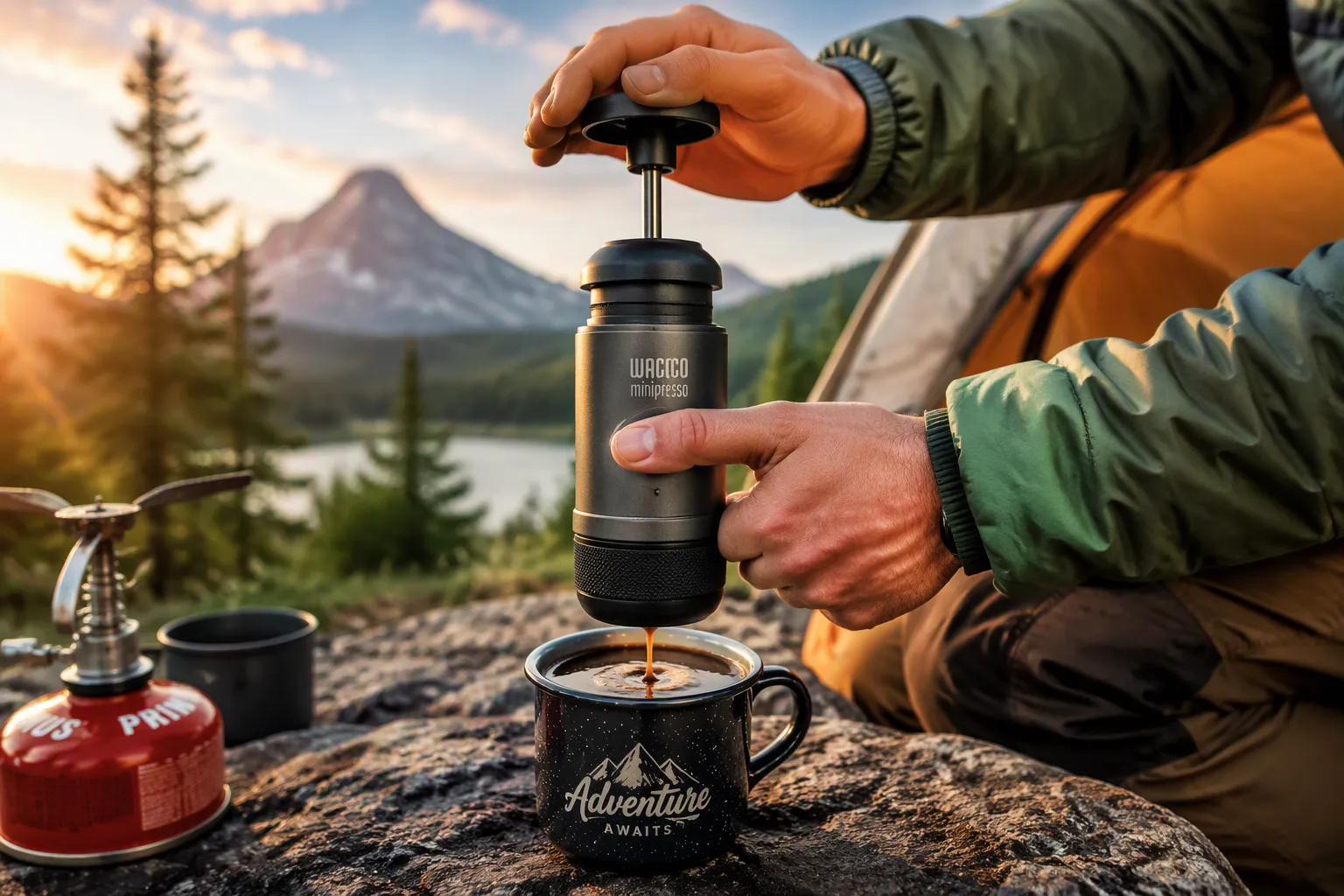
You want great coffee outdoors, and the right gear makes it happen. For backpacking, grab the GSI Outdoors Java Drip or Miir Pourigami. Car campers love the YETI Rambler French Press. Group trips call for the AeroPress Original, our top portable camping coffee maker overall.
So which camping coffee maker fits your trip? That depends on how you travel and how much you carry. We compared the best portable coffee makers on brew quality, portability, ease of use, durability, and cost. Every portable coffee maker here earns its spot. The best portable coffee makers for your camping adventure simply match your style. A backpacking coffee maker saves ounces. A camp coffee maker adds comfort. Pick your portable coffee maker, pack it, and brew.
Key Takeaways
Pick the coffee maker that fits your trip: backpackers need very light choices, car campers can bring bigger presses, and groups need brewers that make a lot at once.
The AeroPress Original is the best all-around portable camping coffee maker because it makes great-tasting coffee, lasts a long time, and is easy to use.
The GSI Java Drip is the lightest coffee maker for backpacking. It weighs only 0.3 ounces and packs flat.
The YETI Rambler French Press keeps coffee hot for hours and works great for car camping or group trips.
Clean your coffee maker after every trip and store it dry so it keeps working well for years.
Best Camping & Backpacking Coffee Makers of 2026 at a Glance
Key Specs Side by Side
The table below lines up the best camping & backpacking coffee makers of 2026 on the numbers that matter most. You get price, capacity, weight, and a cleaning score for each model where data exists.
Product | Price | Liquid Capacity | Weight | Ease of Cleaning (score) |
|---|---|---|---|---|
AeroPress Go (closest to AeroPress Original) | $50 | 8 fl. oz. | 11.5 oz. | 4.9 |
GSI Outdoors Ultralight Java Drip | $13 | 8 fl. oz. | 0.3 oz. | 4.5 |
MiiR Pourigami | $35 | 8 fl. oz. | 6.7 oz. | 4.9 |
ESPRO P0 Ultralight Travel French Press | $50 | 16 fl. oz. | 9.6 oz. | N/A |
Brew method shapes the rest of the picture. The GSI Java Drip is a collapsible pour-over device, and it shines where space and weight matter. The AeroPress Go packs its own brewing vessel, which doubles as a camp cup. The YETI Rambler French Press runs bulkier and heavier, yet it brews 3 to 6 cups at a time for groups. Single-serving devices suit one or two people. They grow time-consuming for a crowd.
How to Read the Picks
Treat this camping coffee maker comparison as a starting point, not a scoreboard. Read portability first: weight, packed size, and whether parts nest or clip to your pack. Then check ease of use. Count the parts, the steps, and any hands-on pumping or pouring. Time to brew runs from combining coffee and water until your cup fills, so leave boiling time out of it.
Cleanup deserves a close look too. Ask how long the grounds take to empty and how long the maker needs to cool before you handle it. On the cleaning scores, 4.8 or higher rates exceptional, 4.5 to 4.7 is very good, and 4.2 to 4.4 is good. Coffee strength works differently. A stronger brew dilutes into an Americano for extra servings, so a lower strength score still works if you like milder coffee. Use these criteria to sort great portable coffee makers by your own trip.
Best Overall Portable Camping Coffee Maker: AeroPress Original
Brew Quality and Performance
The AeroPress Original won our Best Overall Camping Coffee Maker award for 2026, and taste tests agree. Testers loved the smooth, strong flavor. It ranked in the top two of every brew method they tried. Your skill level hardly matters here. The AeroPress makes consistently good coffee with every brew, whether you are a seasoned barista or a first-timer.
“The AeroPress Original offers the best-tasting camp coffee that provides both versatility and consistency with every brew… it’s all in a reasonably compact, travel-friendly, and highly durable package.”
Versatility makes this portable camping coffee maker stand out. You can brew espresso-style shots, American-style cups, or even cold brew. Strength is easy to control. A full brew takes about one minute, so you wait less and enjoy the view more. Forced extraction means you can skip the goose-neck kettle. A basic camp kettle works fine.
Portability and Best Use Cases
Setup and cleanup stay simple on the trail. Grounds pop out as one solid puck, and you need no extra rinse water in the backcountry. The brewer alone weighs 6.5 oz and packs to the size of a small travel mug or water bottle. It holds up to 10 oz, or four espressos, and uses a paper filter, with stainless sold separately. The MSRP is $40.
Award: Best Overall Camping Coffee Maker (2026)
Brew type: Column/vacuum press
Capacity: 10 oz (1 cup) or 4 espressos
Weight (brewer alone): 6.5 oz
Filter: Paper (stainless sold separately)
MSRP: $40
Tough plastic and no fragile parts make this camp coffee maker a survivor. It has handled ski trips, van travel, and Rockies backpacking with hardly any wear. Group trips and car camping suit it best. It also works as a backpacking coffee maker for anyone willing to carry a few extra ounces. Campers, hikers, and outdoorsmen have trusted this portable coffee maker for years, and it remains the best camp coffee maker overall for most camping setups.
Most Portable Pick: Miir Pourigami
Packability and Setup
The Pourigami breaks down into three flat stainless steel pieces. It stores almost completely flat, so it takes up very little room in your camp kitchen box. A travel sleeve comes included, and it holds your filters too. That keeps the whole kit organized in one spot. This is the most compact pour-over coffee maker we tested.
Setup takes seconds. Notches on each piece slide together to form a sturdy triangular cone. Drop in a filter, add grounds, and pour hot water over them. The powder-coated stainless steel shrugs off bumps in your pack. On weight and packability, though, there is a trade-off. The dripper weighs 4.89 oz alone and 5.52 oz with its case. That makes it heavier than the lightest compact models. Ultralight backpackers may want a lighter backpacking coffee maker instead.
Brew Performance and Best Use Cases
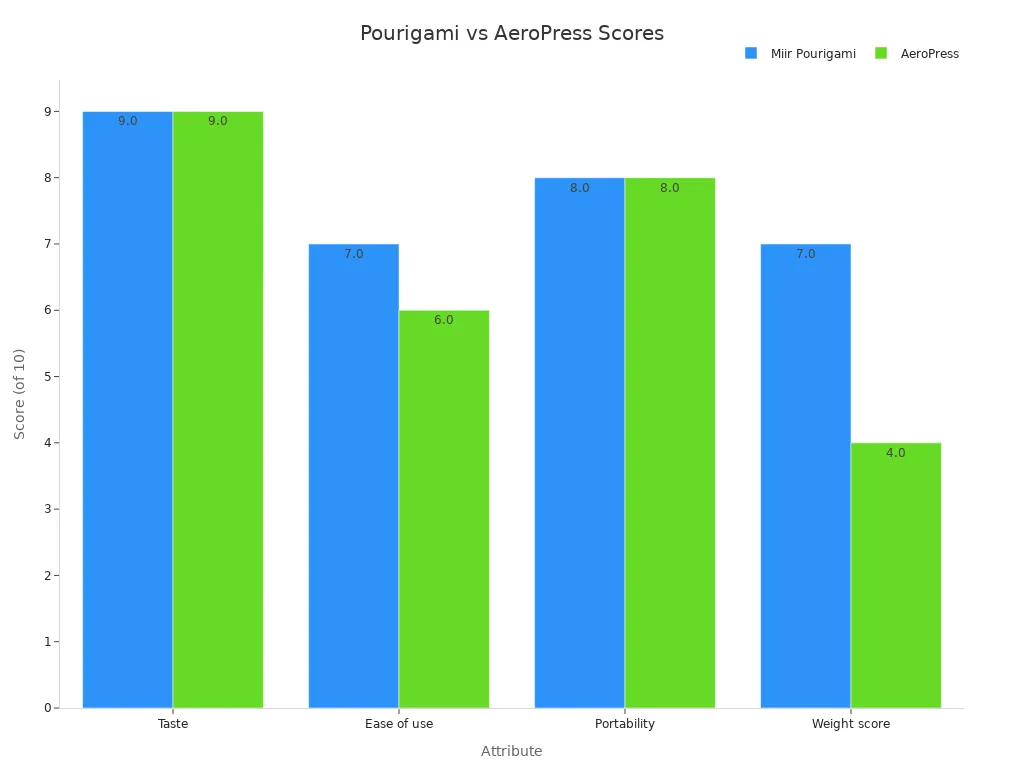
The Pourigami brews excellent coffee. It scored 9.0 out of 10 on taste, tying the AeroPress. One quirk shapes your technique, though. The cone has no spiraling side ridges, so the filter sticks to the walls. This slows the flow, which is the opposite of a ridged dripper like the Hario V60. A coarser grind works better here, and it pulls out different flavor notes.
Great results take practice. The 4:6 pour method works best, using five pours to balance sweetness and acidity. Practice at home before your trip for repeatable cups. This portable coffee maker suits car camping, van life, and cozy mornings at home. For camping with a vehicle nearby, it is a smart pick among portable coffee makers. Just decide whether the extra ounces are worth it for your camp coffee maker setup.
Best Ultralight Backpacking Coffee Maker: GSI Outdoors Java Drip
Weight and Packability
The GSI Outdoors Java Drip earns our best ultralight coffee maker title with a number that is hard to beat. It weighs just 0.3 oz, or 8 grams. That is lighter than a single AA battery. It folds down to 4.2 x 4.2 x 0.5 inches, so it slides into a side pocket and takes up almost no pack space. Among backpacking coffee makers, nothing else in our tests packed this flat.
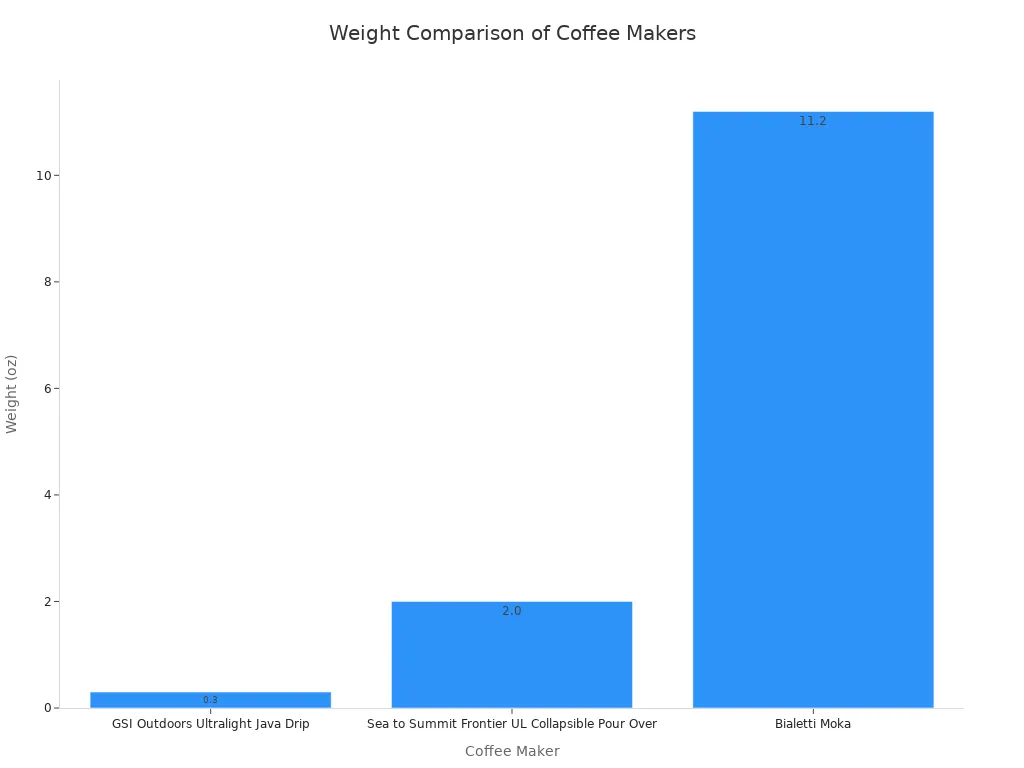
Weight and packability like this change how you plan a trip. You can carry this portable coffee maker without cutting food or layers. The frame is plastic and the cone is nylon mesh, so it shrugs off a stuffed pack. It brews one to two servings per batch. For solo hikers, that is plenty. For a group, you simply brew again.
Ease of Use on the Trail
This backpacking coffee maker works like any pour-over cone. Add coffee to the mesh, then pour hot water through it. No paper filters means nothing extra to buy or pack. The wide base sits securely on pots and cups of many sizes, so brewing stays steady on uneven ground. That stability matters when you balance a stove on a rocky ledge.
Cleanup is the one spot where this ultralight coffee maker asks for patience. The mesh can be messy to rinse, and the cone stays damp after brewing. Give it a shake and a wipe, then let it air dry. A storage cover lets you pack it clean and doubles as a trivet. If you want the best backpacking coffee press for fast trail mornings, this is a strong pick. Pair it with a simple kettle and you have a camping coffee maker that weighs next to nothing. For backpacking and camping, few portable coffee makers match this blend of low weight and good coffee.
Best Handheld Espresso: Wacaco Nanopresso and Picopresso
Brew Quality and Ease of Use
Both Wacaco pumps make real espresso without power, but they brew very different shots. The Picopresso uses a standard 51mm non-pressurized portafilter basket and holds up to 18g for a proper double shot. Testers rated its shot quality 4 out of 5. It makes fuller-bodied, more consistent shots and is more forgiving of grind size errors. The Nanopresso uses a small pressurized plastic basket with an 8g dose. A refractometer reading showed TDS around 6.65% and extraction yield of only 13.7%, which points to underextraction. Its crema looks nice, but the flavor stays mild and round. Testers gave it 2 out of 5 for shot quality.
Attribute | Picopresso | Nanopresso |
|---|---|---|
Basket | 51mm non-pressurized, up to 18g | Pressurized plastic, ~8g dose |
Shot quality | 4/5 | 2/5 |
Ease of use | 4/5 | 3/5 |
Ease of use follows a similar pattern. The Picopresso feels easy once you understand the process. Its side-mounted pressure arm is awkward at first, yet it builds plenty of pressure. The Nanopresso is fairly straightforward too: fill the basket, screw on the portafilter, attach the water tank, and pump the side button. Its side-mounted pump feels less ergonomic with finer grinds, though. For a camping coffee maker that pulls real espresso, the Picopresso is the stronger performer.
Portability and Best Use Cases
Weight and packability favor both pumps. The Picopresso measures 2.8 x 3.1 x 4.2 inches and weighs 0.77 to 0.8 lb. Its metal build feels stout, and it holds 80 ml, enough for a double shot in under a minute. The Nanopresso runs even smaller, so it suits anyone who puts size first.
Think about where each one fits. The Picopresso suits ground coffee users who want better portable espresso. Take it camping, backpacking, vanlife, or bikepacking. It even replaces a home espresso machine or slips into a purse. The Nanopresso wins on tight luggage allowances and weight-conscious trips. Either way, you get a portable coffee maker that needs no power. Pair it with a hand grinder and you have a capable camp coffee maker. For many trips, this beats hauling the best backpacking coffee press. Among portable coffee makers, these two cover espresso lovers well.
Best Car Camping Coffee Maker: YETI Rambler French Press
Capacity and Heat Retention
The YETI Rambler French Press comes in two sizes, and both suit a tailgate or basecamp setup. The 34 oz model brews 2–4 cups. The 64 oz model brews 6 or more cups, roughly a full pot of coffee. That range covers a couple sharing a tent or a whole crew waiting on breakfast.
Attribute | Detail |
|---|---|
Capacity | 34 oz (2–4 cups) or 64 oz (6+ cups) |
Heat retention | Double-wall vacuum insulation keeps brewed coffee warm longer than a standard uninsulated press |
Build | 18/8 stainless steel with DuraSip ceramic lining |
Cleaning | Vessel and all components are dishwasher safe |
Heat retention is where this camping french press pulls ahead. The insulated stainless-steel body holds warmth far longer than a plain glass press. Cold morning air barely touches your coffee. You can eat breakfast in shifts and the last cup still tastes hot. That matters at camp, where a slow start is half the fun.
Durability and Best Use Cases
YETI builds this press to survive camp life. Kitchen-grade 18/8 stainless steel resists punctures and rust. The double-wall vacuum insulation adds thermal performance on top of toughness. An elongated handle gives you a controlled grip, and a non-slip foot keeps the press steady on uneven ground. The plunger uses a simple design with no small parts to lose in the dirt. Everything is dishwasher safe once you get home.
Safety deserves a mention. YETI advises against forcing the plunger down. Too much force can eject hot coffee and cause scalds. If the plunger feels stiff, pull it out, stir the grounds, and press slowly.
This camp coffee maker fits car campers, RV travelers, and basecamp coffee drinkers who want a durable press that keeps coffee hot. It also brews tea, and YETI includes recipes you can tweak to taste. The trade-offs are real, though. It costs more than simpler makers and runs bulky for small, light kits. If weight and packability top your list, look at a backpacking coffee maker instead. For a portable coffee maker that lives in the truck, though, this one earns its place. Few portable coffee makers handle group camping this well, and it beats hauling a fragile glass press on any camping trip.
More Top Picks for 2026
Trinity Zero, ESPRO Ultralight, and Wacaco Pipamoka
Three more names complete the list, and each one fixes a different problem. The Trinity Zero is a small press-style brewer that works well for travelers who want a full immersion cup without glass. The ESPRO Ultralight Travel Coffee Press brings a double-filter design to the trail, so your cup stays smooth and free of grit. The Wacaco Pipamoka twists to brew and keeps the grounds inside, which makes cleanup fast at a campsite.
None of these three is the best on every measure. The ESPRO holds more coffee than most single-serve options, but it adds ounces to your pack. The Pipamoka brews a smaller cup, and the twist mechanism takes a few tries to learn. The Trinity Zero falls between them on capacity and weight. Think of these as strong second choices for a camping coffee maker when your first pick is out of stock or too expensive.
Wacaco Prestina, Outin, Flair, Tastyle, and OXO Brew
This group leans toward espresso and electric brewing, and the trade-offs change with each model. The Outin Nano 2 runs on a rechargeable battery, so you get espresso without pumping. Its 8 g basket limits shot size, though. A larger Basket Plus has been hinted at, but it has no launch date yet. The Flair 2GO folds into a hard case that holds every part and includes a pressure gauge for shot feedback. It pulls real espresso without electricity or a battery. You will need a grinder, hot water, and ideally a scale, and it wobbles on uneven ground.
Product | Key Features | Performance Notes |
|---|---|---|
Outin Nano 2 | Rechargeable battery espresso maker | Small 8 g basket limits shot size |
Flair 2GO | Folds into hard case, pressure gauge | Needs grinder, hot water, scale; wobbly on uneven surfaces |
Wacaco Prestina, Tastyle, OXO Brew | Manual and electric brewers | Fit varies by model and trip style |
The Wacaco Prestina, Tastyle, and OXO Brew fill other niches. The Prestina suits manual espresso fans. The Tastyle and OXO Brew work well for car camping, where power and space matter less. Compare these great portable coffee makers by your own habits. A camping percolator still wins for big groups who want a familiar pot. A camping percolator also costs less than most espresso pumps. For backpacking coffee makers, stick with the lighter picks above. For camp coffee makers at a basecamp, this group gives you options.
What to Look for in a Camping Coffee Maker
Match the Maker to Adventure Type and Group Size
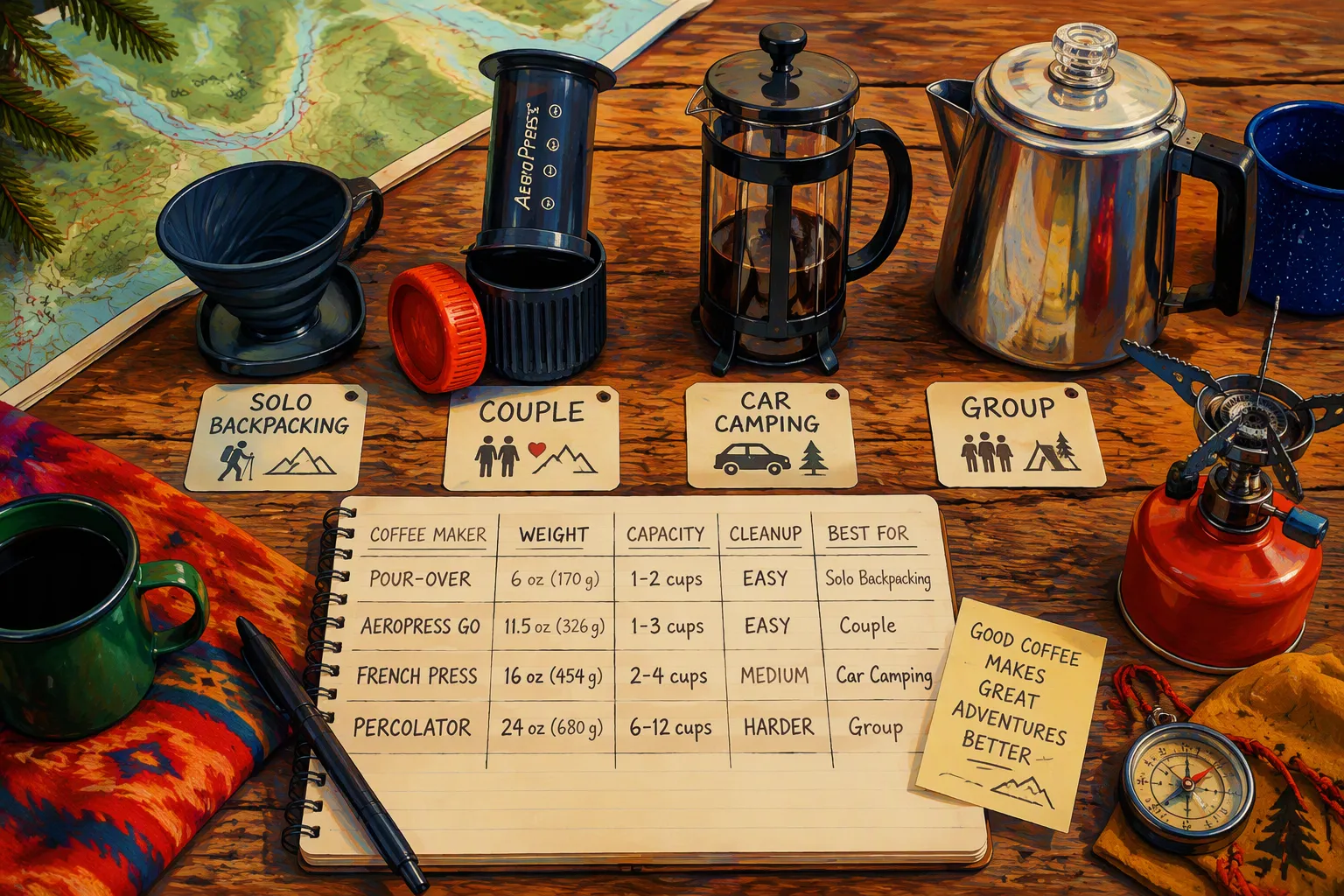
Start with your trip, not the gear list. A solo thru-hiker wants a collapsible pour-over cone. A couple splitting gear can share a small press. A family at a basecamp needs volume and comfort. This table shows where each style fits best.
Adventure Type | Group Size | Recommended Maker | Key Priority | Trade-offs |
|---|---|---|---|---|
Backpacking (solo/ultralight) | 1 | Collapsible pour-over dripper | Weight, packability | Needs filters or careful technique; single-serve only |
Backpacking (all-around) | 1–2 | AeroPress Go | Versatility, easy cleanup | Around 11 oz; separate cycles for two |
Car camping | 2–4 | French press | Capacity, comfort, rich flavor | Moderate cleanup; heavier |
Group camping | 6+ | Larger percolator | High volume, any heat source | Harder cleanup, less nuanced flavor |
Group size drives the math. Most backpacking coffee makers brew 1–3 servings. Solo and duo hikers suit single-cup cones or presses. Larger groups must weigh cleanup time between servings, or step up to a group press. Avoid over-buying capacity. A big pot you fill halfway wastes pack space.
Brew Method, Power Source, and Cost
Brew method shapes weight, taste, and cleanup. Drip and pour-over rank lightest, and mesh cones skip paper filters. French press systems add body and need no extra cookware if you already run a stove system. Stove-top espresso and moka pots deliver the richest cup, yet they run heavy and stay hot to disassemble. Hand-pumped espresso carries grams and multiple parts. Instant coffee weighs almost nothing and needs no cleanup, though it costs more per serving.
Power source matters mostly for electric models. Battery espresso makers free you from pumping, but they add charging chores. Manual pumps and pour-over setups need no power at all. Match the source to your access. A car camper can charge gear from the vehicle. A backpacker cannot.
Cost tracks complexity. Simple cones and drippers sit at the low end. Hand pumps and insulated presses cost more. Set a budget before you shop, then confirm the maker fits your trip. Use this camping coffee maker comparison as a filter, not a verdict. That is the heart of what to look for in a camping coffee maker.
A few quick pairings help. Already run a Jetboil or Windburner? Grab the matching press. Want real espresso on trail? Try a Wacaco Nanopresso. Prioritize flavor over weight on a bike tour? A moka pot works well. Big-mile days with zero cleanup? Quality instant earns its place.
This backpacking coffee maker buyers guide keeps one rule: fit beats features. A lightweight ultralight coffee maker wins for a solo hiker. A sturdy camp coffee maker wins for a tailgate crew. Weigh your adventure type, group size, brew method, and budget together. That is what to look for in a camping coffee maker, and it is the core of any backpacking coffee maker buyers guide. Apply the same lens to every coffee maker for camping & backpacking you consider, and your backpacking coffee maker buyers guide research pays off on the very first morning.
Care and Maintenance Tips
Cleaning in the Field and at Home
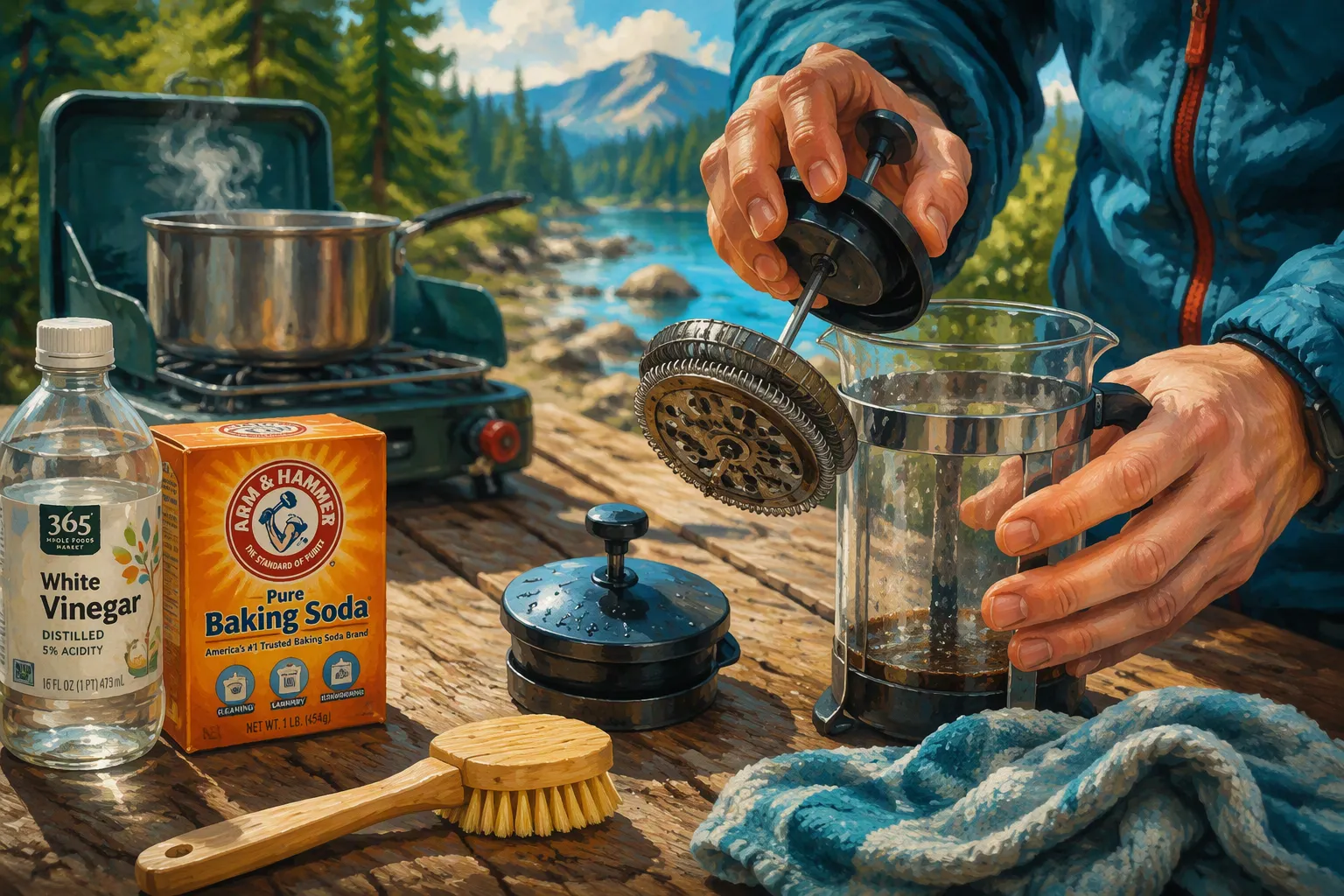
Good coffee starts with a clean brewer. A quick field routine keeps flavors fresh and saves your drinking water. Dry-wipe the inside before any water touches metal. A paper towel or rag removes most coffee oils and spent grounds, and those oils turn rancid fast. When you do wash, use two or three drops of concentrated scent-free biodegradable soap. Scent-free matters at camp, because fragrances can attract wildlife.
Context | Method | Why It Works |
|---|---|---|
Field | Dry-wipe before washing | Removes most oils and grounds; saves water |
Field | Minimal biodegradable soap | Cleans without contaminating water sources |
Field | Boil 2 inches of water for 3 minutes | Loosens caked-on residue |
Home | 50/50 white vinegar and water soak | Breaks down mineral scale |
Home | Baking soda paste | Lifts oils without scarring steel |
Get rid of greywater the right way. Strain out solids, then spread the water over a wide dry area, 200 ft from any water source. That follows Leave No Trace and keeps animals from gathering. Dry every part fully before packing. Damp gear grows mold and earns your pot the nickname swamp pot.
At home, soak scaled parts in a 50/50 mix of white vinegar and filtered water for 8 hours. A baking soda paste handles oily buildup on stainless steel. Skip the dishwasher for delicate parts, since high heat near 150°F destroys rubber gaskets and silicone seals. Which camping coffee maker is the easiest camping coffee maker to clean? Usually a press with a solid puck and few parts. Deep-clean any camping coffee maker every 5 trips or 30 days of heavy use.
Keeping Your Maker Durable Season After Season
Small habits add years to your gear. Disassemble your brewer after each trip. Run a pipe cleaner or twig through a percolator stem, brush the basket, and pull apart a French press mesh every 48 hours of use. Keep the AeroPress seal clean and uncompressed so it holds pressure. Never use vinegar on aluminum pots, because the acid pits the metal. Never use bleach either, since it corrodes stainless steel and leaves a chemical aftertaste.
Storage decides next season’s first cup. Keep the lid cracked or off, add a 5 g silica packet, and store the maker in a breathable canvas sack instead of a plastic bag. Treat wooden handles with food-grade mineral oil every 4 months. For plastic carafes, soak 2 tablespoons of baking soda in warm water for 60 minutes to kill trapped odors. A little care on every camping trip keeps your brewer ready for the next one.
Your adventure picks the winner. Backpackers should grab the GSI Java Drip or Miir Pourigami. Car campers will love the YETI Rambler French Press. Group trips call for the AeroPress Original, our top portable camping coffee maker.
Weigh brew quality, portability, ease of use, durability, and cost before you buy. The best camping coffee makers simply match how and where you camp. A camping coffee maker that shines on a thru-hike may feel wrong at a tailgate. That is normal.
Use this guide to sort the best portable coffee makers by your own trips. Then pack your gear and brew outdoors. Great camping coffee makers turn any campsite into your favorite cafe. Your perfect cup is waiting out there.
FAQ
What is the easiest camping coffee maker to clean?
A press with a solid grounds puck and few parts wins here. The AeroPress Original pops out one puck, and the YETI Rambler French Press is fully dishwasher safe at home. Rinse mesh cones well, since wet grounds cling to the fabric.
Do I need electricity for any of these brewers?
No. Every pick in this guide brews without power, from the AeroPress Original to the Wacaco Picopresso. Battery espresso makers exist, but they add charging chores. A manual camping coffee maker keeps your morning simple, wherever you pitch your tent.
Can I use a camping percolator for a big group instead?
Yes. A percolator brews high volume and works on any heat source, which suits six or more people. Cleanup takes more effort and the flavor is less nuanced. For smaller crews, the AeroPress Original or a French press brews better coffee with less fuss.
How much should I spend on a camping coffee maker?
Simple cones and drippers cost the least, like the $13 GSI Java Drip. Hand pumps and insulated presses cost more, such as the $40 AeroPress Original. Set your budget first, then confirm the maker fits your trip and group size.
How do I keep my brewer working season after season?
Disassemble and dry every part after each trip. Skip the dishwasher for rubber gaskets and silicone seals. Soak scaled parts in a vinegar and water mix at home. Store the maker in a breathable sack with the lid cracked, and your gear stays ready for the next camping season.