An electric composting machine offers a revolutionary solution for turning food scraps into natural fertilizer. 差不多是43% of all food produced in the United States becomes food waste in homes. A food waste composter quickly transforms food scraps using kitchen composting. An electric composter keeps composting odor-free and sustainable for any kitchen.
How an Electric Composting Machine Turns Food Waste into Fertilizer
The Technology Behind Electric Composters
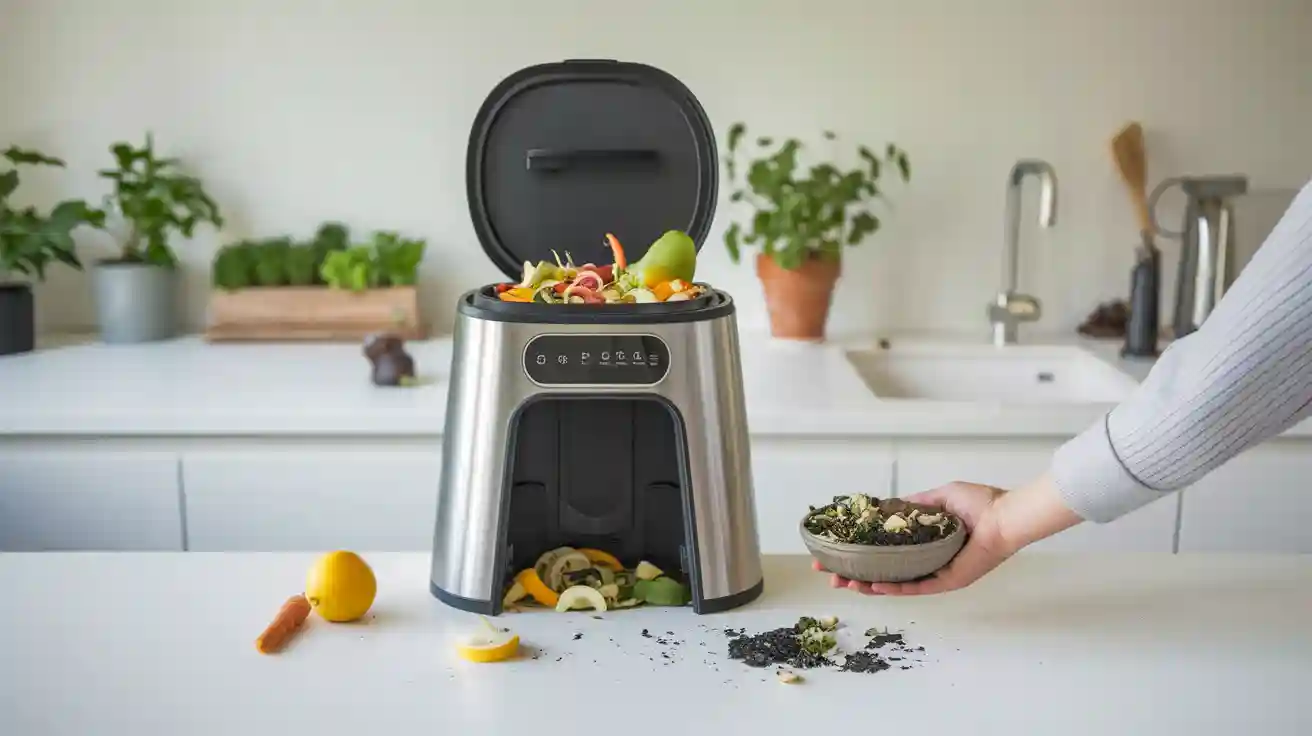
Electric composting machines use advanced composting technology to transform food scraps into usable fertilizer quickly and efficiently. These devices combine heat, mechanical grinding, and aeration to break down food waste. Most electric composters use high temperatures, often around 260°F, to evaporate water from food scraps, which are mostly water by weight. Mechanical grinding, such as a Tri-Blade system, shreds food waste into smaller pieces, increasing the surface area and speeding up decomposition. Aeration ensures that oxygen reaches all parts of the waste, supporting aerobic microbes that help with the composting process.
Many electric composters include 內建感應器 and automation features. These sensors monitor temperature and humidity, keeping conditions ideal for composting food scraps. Automatic shredding and 烘乾 functions help reduce odor and speed up the process. Odor control systems, like activated carbon filters and silicone sealing strips, trap smells and prevent leaks. Some models even have self-cleaning features and smartphone app integration for remote monitoring.
Electric food waste digesters use stainless steel parts for durability and easy cleaning. This design helps the composting solution last longer and keeps the composting process efficient.
| Feature / Sensor Type | 簡介 |
|---|---|
| 溫度傳感器 | Monitor and control temperature for optimal composting. |
| 濕度傳感器 | Track moisture levels for efficient decomposition. |
| Ventilation Sensors | Regulate airflow to reduce odors and support aerobic composting. |
| Automatic Shredding | Shreds food scraps for faster breakdown. |
| 乾燥功能 | Removes moisture to speed up composting and reduce odor. |
| 氣味控制 | Uses activated carbon filters and vacuum technology to minimize smells. |
| 熱交換器 | Recovers heat to improve energy efficiency. |
| Closed-loop Water Management | Extracts and reuses water, sometimes with app notifications. |
| 智慧型手機應用程式集成 | Allows remote control and monitoring of the composting process. |
Step-by-Step Composting Process
The composting process in an electric composter happens in several stages. Each stage uses composting technology to turn food scraps into fertilizer in a short time.
- 烘乾: The electric composting machine heats and dries the food waste. This step reduces the volume of food scraps and kills harmful bacteria and weed seeds. The drying process also prepares the food waste for faster breakdown.
- 混合: The machine grinds and turns the dried food scraps. This mixing increases oxygen flow and breaks the scraps into smaller pieces. More surface area means microbes can work faster, making the composting solution more efficient.
- 散熱: The final stage cools the compost and continues to remove moisture. The compost matures and becomes ready for use as a natural fertilizer.
The entire process can take as little as 12 to 24 hours in some electric composters. For example, the CR-30 Food Composting Machine can turn up to 30 kg of food waste into organic fertilizer within a day. Other machines may take up to three days, but this is still much faster than traditional composting.
| 階段 | 簡介 | 所需時間 | 結果 |
|---|---|---|---|
| 1. Drying and weight reduction | Heats and dries food scraps | 2到4小時 | Dried waste |
| 2.發酵 | Converts to fertilizer | 48到72小時 | Usable fertilizer |
The composting process in electric composters achieves up to 體積減少90%, making food waste composting much more manageable for households.
Electric vs. Traditional Composting
Electric composters offer a modern composting solution for managing food scraps indoors. They use composting technology to speed up the process and reduce odors. Traditional composting relies on natural microbes and outdoor conditions, which can take months or even years to break down food waste.
| 獨特之處 | 電動堆肥機 | 傳統堆肥 |
|---|---|---|
| 故障時間 | 6 24小時 | 幾周到幾個月 |
| Finished Compost | 幾天到幾週 | 個月 |
| 地點 | 室內使用 | 需要戶外空間 |
| 保養 | 極簡、自動化 | Regular turning and monitoring |
| 氣味控制 | Sealed, filtered system | 需要精心管理 |
| 廢棄物處理能力 | 中小型家庭 | 大型花園 |
| 價格 | Higher upfront, low running | Low setup, almost free to run |
Electric composters produce compost quickly and with less effort. They work well for people with limited space or those who want a clean, odor-free kitchen. However, the compost from electric composting machines may not have the same nutrient levels or microbial diversity as traditional compost. Some electric composters, like 尼卡薩, use microbial starters to improve the quality of the compost, but others produce a dehydrated product that may need extra nutrients for plants.
Traditional composting creates richer, more complete compost, but it takes longer and needs more work. Electric composters provide a fast, convenient composting solution for food waste composting, making it easier for families to recycle food scraps and reduce landfill waste.
Electric composting machines bring composting food scraps into the kitchen, making food waste composting accessible and efficient for everyone.
Benefits of Using a Food Waste Composter at Home

Environmental Impact and Reducing Landfill Waste
A food waste composter helps households reduce kitchen waste and lower their environmental footprint. Households using a composter can divert up to 4.2 kilograms of food scraps per week from landfills, which equals a 25% reduction in landfill waste. The average US household can keep about 450 pounds of food waste out of landfills each year by composting. This process prevents methane, a greenhouse gas much stronger than carbon dioxide, from forming in landfills. Composting food scraps at home reduces methane emissions by about 33%. These environmental benefits support a more sustainable lifestyle and help communities reach their waste reduction goals.
Composting food scraps at home supports environmental laws in places like California and New York, which encourage food waste composting to protect the planet.
Producing Natural Fertilizer for Your Garden
A food waste composter transforms kitchen scraps into a sustainable source of fertilizer. However, electric composters often produce dehydrated food waste, not true compost. This material needs extra curing before it becomes safe for plants. Studies show that using this product directly in soil can harm seeds and young plants due to high salt content and low moisture. For best results, users should let the material mature before adding it to gardens. When fully processed, compost improves soil health and creates nutrient-rich soil for growing vegetables and flowers. This process supports reducing food wastage and provides a nutrient-rich fertilizer for home gardens.
Convenience, Odor Control, and User Experience
Electric composters make kitchen composting easy and clean. Many models use interior deodorization, 活性炭過濾器, and aeration systems to control odors. Users report that these machines operate quietly and fit well in small kitchens. Features like motion-activated lids, user-friendly controls, and continuous composting make the process simple. Most composters handle a wide range of food scraps, including meat and dairy, which traditional composting cannot process easily. The convenience and odor control encourage more people to try food waste composting at home.
- Setup is quick and straightforward.
- Devices operate quietly and with minimal odor.
- Compact designs fit on kitchen counters.
Cost, Energy Use, and Accepted Food Waste Types
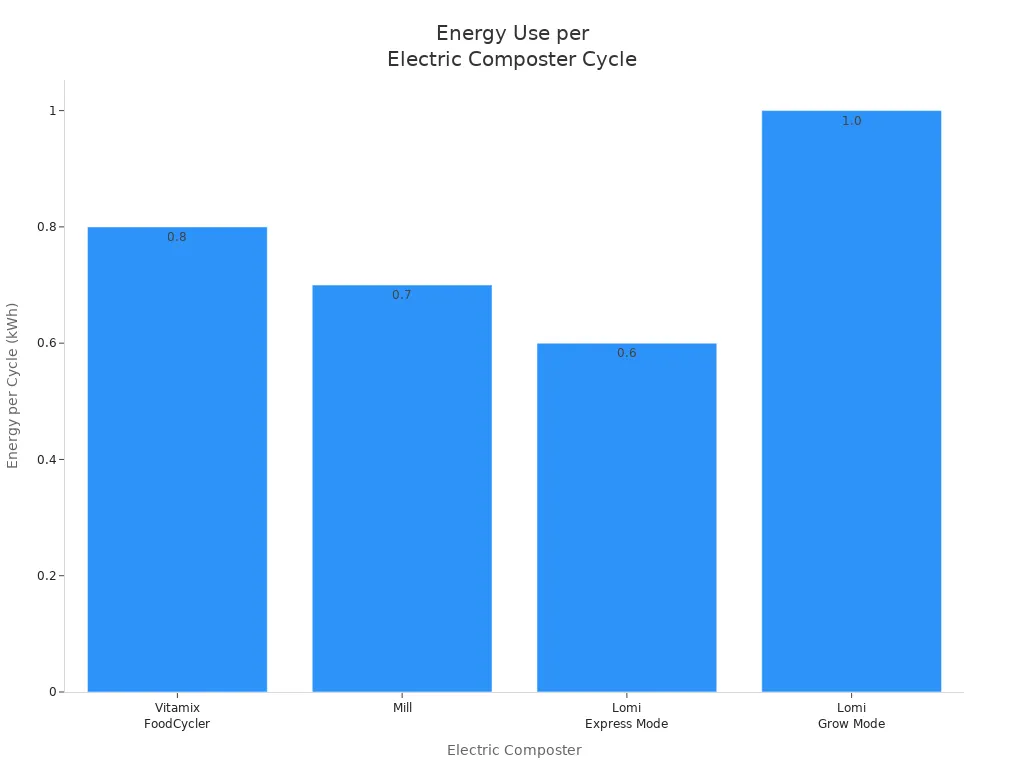
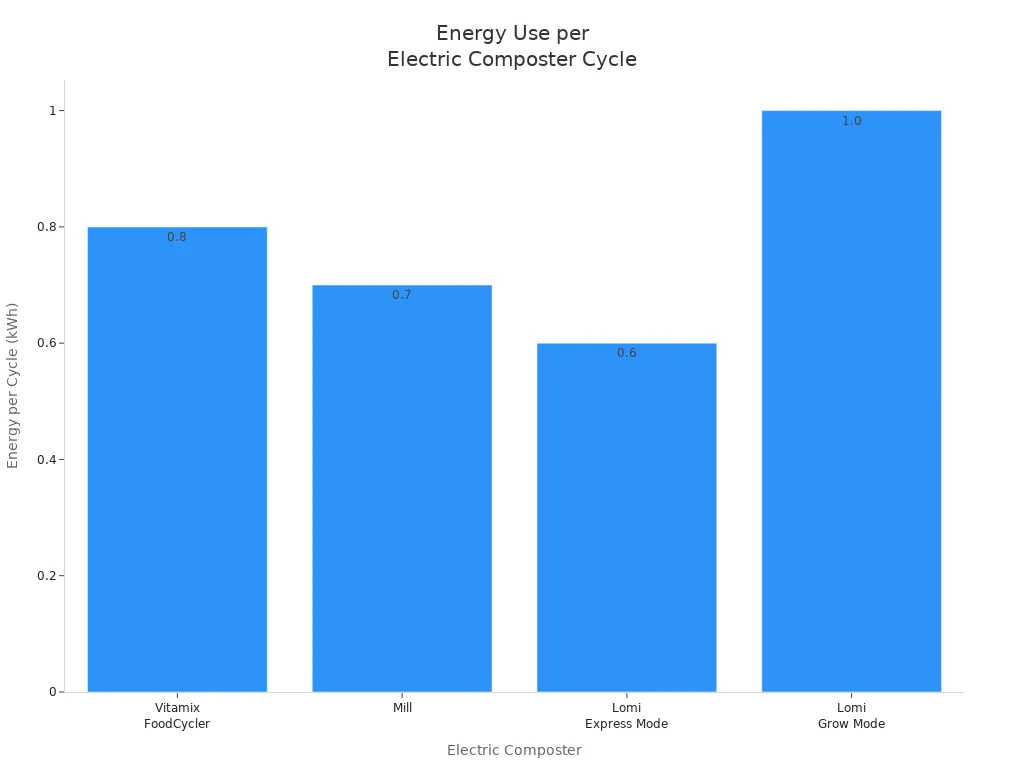
A food waste composter uses electricity, but energy consumption stays low. For example, the Vitamix FoodCycler uses about 0.8 kWh per cycle, similar to running a desktop computer for an hour. The Mill composter uses about 0.7 kWh daily, adjusting cycles based on the amount of food scraps.


Most electric composters accept a variety of food scraps:
| Accepted Food Waste Types | Not Accepted Food Waste Types |
|---|---|
| 水果、蔬菜 | Bones (except small chicken and fish bones) |
| Meat, fish, chicken | Shells, tough husks, fruit pits |
| Cooked egg, grains, nuts | Cooking oil, glass, metal, plastic |
| Coffee grounds, cheese | Disposable tableware, medicine |
| Bread, noodles, stems | Cigarettes, paper tape, rubber |
While the upfront cost of a composter can be high, the long-term benefits include less landfill waste, lower greenhouse gas emissions, and a steady supply of nutrient-rich compost for gardens.
Electric composting machines help families recycle food waste quickly and cleanly. They lower landfill waste and greenhouse gas emissions.
Experts recommend choosing a model that fits household needs and checking which food scraps it can process.
這些機器 support global sustainability goals and make composting easy for everyone.
常見問題
How long does it take for an electric composter to finish a cycle?
Most electric composters finish a cycle in 12 to 24 hours. Some models may take up to three days for larger amounts of food waste.
Can electric composters handle meat and dairy products?
Yes, many electric composters accept meat and dairy. Users should check the machine’s manual for a full list of accepted food scraps.
Does the compost from an electric composter smell?
The compost usually has a mild, earthy smell. Odor control systems, such as carbon filters, help keep kitchens fresh and odor-free.